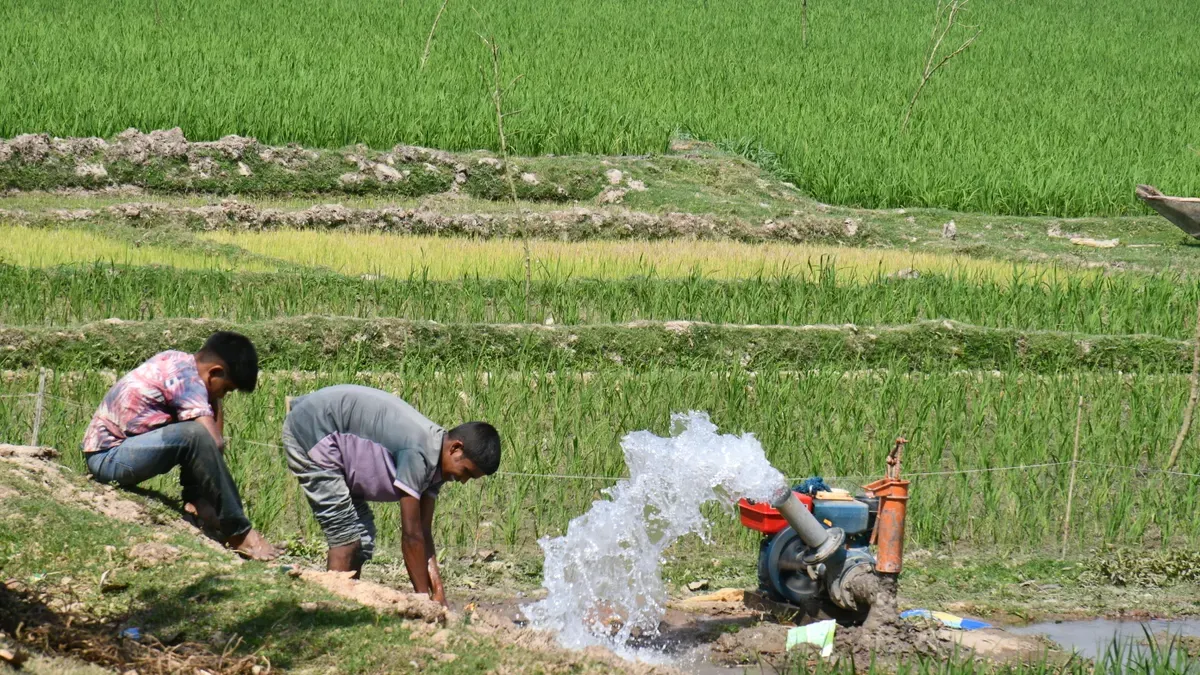
 How to set up a DC water pump with solar panels
Jul 16, 2026
You can improve your efficiency by setting up a dc water pump powered by solar energy for your water needs. Choose your site with care, secure each mount, and check every wire for safety and performance. MASTER EAGLE offers reliable solutions that suit both beginners and DIY enthusiasts.
Key Takeaways
Gather essential materials like solar panels, a pump controller, and a DC water pump to set up your solar water system.
Choose a sunny location for your solar panels and mount them securely at a 30-degree angle for optimal performance.
Perform regular maintenance by cleaning panels and checking connections to ensure your solar DC water pump operates efficiently.
DC Water Pump Installation Guide
Materials and Components
You need several essential materials to set up a solar dc water pump for your water needs. Gather solar panels to generate electricity, a solar pump controller to manage power, and a dc water pump to move the water. Include wiring, mounting hardware, and consider a solar generator for backup. The solar panels convert sunlight into DC electricity, and the controller ensures the pump receives the correct voltage and current. The pump selection depends on your flow rate and head requirements.
Solar panels
Solar pump controller
DC water pump
Wiring and connectors
Mounting hardware
Optional solar generator
System Sizing
Sizing your system is crucial for optimal performance and efficiency. You must calculate the pump power based on your daily water needs and the total dynamic head. Use the following table to guide your sizing process:
Specification Type
Details
Total Dynamic Head (TDH)
Essential for determining pump size and efficiency.
Pump Types
Screw and centrifugal pumps available.
Motor Efficiency
Brushless DC motors offer over 90% efficiency.
Solar Panel Sizing
Oversize panels by 25-30% to meet power demand.
Lifespan
Solar panels last 25 years; pump systems over 20 years.
Calculate the required solar panel wattage using this formula:
Component
Description
Pump Power (W)
Power requirement of the pump in watts.
Safety Factor
Multiplier (1.25 to 1.3) for inefficiencies.
Required Array (W)
Total solar panel wattage needed.
Formula
Required Array (W) = Pump Power (W) x Safety Factor
Site Selection and Mounting
Choose a location that maximizes sunlight exposure for your solar panels. South-facing installations receive more sunlight, especially in winter. Avoid obstructions like trees and buildings that reduce performance. Mount panels at a 30-degree tilt and test different angles to optimize efficiency. Clean panels regularly to maintain system performance. Securely mount both the pump and panels to prevent movement and damage. MASTER EAGLE provides reliable products for your installation needs.
Tip: Always check your site for shading throughout the day to ensure consistent solar panel performance.
Solar DC Water Pump Installation Steps
Wiring and Connections
You must follow a step-by-step installation guide to connect your solar panels to the dc water pump. Begin by mounting the panels securely at the correct angle. This ensures maximum sunlight exposure and improves efficiency. Next, wire the panels in series or parallel, depending on your water needs and the voltage requirements of your pump controller. Series connections increase voltage, which is ideal for long distances and higher voltage dc water pump systems. Parallel connections increase current, but you must not exceed the controller's maximum voltage limit.
Mount the panels in a location with optimal sunlight.
Wire the panels in series or parallel to achieve the required voltage and current for your pump controller.
Connect the panel strings to the solar pump controller using a junction box with circuit breakers. Always check polarity to prevent damage.
Attach the controller output to the dc water pump, ensuring all wiring is secure and protected from weather.
Tip: Use MC4 connectors for outdoor wiring. These connectors provide reliable, weather-resistant connections for your solar panels and dc water pump.
Mistake
Description
Inadequate Grounding
Ground rods not driven deep enough result in high earth resistance, preventing proper fault current dissipation.
Polarity Errors
Neutral/ground reversal at junction boxes confuses GFCI sensors.
Bonding Omissions
Well casings not bonded per local code create stray currents and shock hazards.
Incorrect Torque
Loose terminals on breakers or controllers cause arcing and heat, damaging insulation.
Sediment Lock
Debris jamming the impeller overloads the motor, generating heat that degrades insulation.
Poor Terminations
Incorrectly torqued MC4 pins create micro-arcing and carbon tracking, leading to ground faults.
Lack of Surge Protection
Skipping DC surge arresters leaves the system vulnerable to transient voltages.
Improper Well Cap Seal
Allowing rainwater to run down the cable into the wellhead.
You must avoid these common wiring mistakes to protect your solar dc water pump and maintain performance.
Safety Checks
Before operating your solar dc water pump, you must perform essential safety checks. Select an installation site with excellent sunlight exposure. Ensure your panels are free from shading throughout the day. Choose the correct pump model based on your water needs, head, and flow rate. Secure all wiring connections among the solar panels, controller, and pump. Implement protective measures for cables and mount the controller in a well-ventilated area away from direct sunlight.
Turn off all power at the circuit breaker before starting the installation.
Use a voltage tester to confirm the power is off before touching any wires.
Wear protective gear, including gloves and eye protection, during the installation process.
Inspect all joints for tightness and verify electrical connections before operation.
Keep the ground around the wellhead stable and free of tripping hazards.
Keep a fire extinguisher nearby if you use a torch or heat gun for wire splices.
Note: Regular maintenance improves system performance. Clean debris from panels and inspect cables and connectors frequently.
Testing and Troubleshooting
After completing the installation guide, you must test your solar dc water pump system. Conduct a trial run to check water output and overall performance. If the pump does not start, follow these troubleshooting steps:
Check if the solar panels generate power properly. Clean the panel surface and measure the open-circuit voltage (VOC) and maximum power voltage (VMP).
Inspect the wiring between the controller, solar panels, and pump. Confirm all connections are secure and free from corrosion.
Verify that the controller parameters match the specifications of the pump and the system configuration.
If direct sunlight is insufficient, you may use a solar generator as backup power. This ensures your water needs are met even during cloudy days or low sunlight periods.
Pump Type
Average Lifespan
Traditional Submersible Pumps
8 to 15 years
Traditional Jet Pumps
5 to 10 years
Solar-Powered Systems
Exceeds 15 years
You can expect your solar dc water pump system to last longer than traditional AC pumps. This improves reliability and efficiency for your water needs.
Callout: Always follow the step-by-step installation guide and safety protocols to maximize performance and protect your investment.
You ensure a successful solar power system installation by following these steps:
Mount panels securely.
Wire controls properly.
Seal the wellhead.
Always double-check connections and follow safety guidelines. If you face challenges, consult MASTER EAGLE support. Solar water pumping increases efficiency and supports sustainability for your home or farm.
FAQ
What is the difference between a DC Water Pump and a traditional AC pump?
A DC Water Pump runs on direct current from solar panels. You get higher efficiency and easier integration with off-grid solar systems compared to AC pumps.
Can you use a Self-Priming DC Diaphragm Water Pump for drinking water?
Yes, you can use a Self-Priming DC Diaphragm Water Pump for potable water. Always choose food-grade materials and check manufacturer certifications for safety.
How do you maintain a DC Diaphragm Pump for long-term use?
Clean filters regularly.
Inspect wiring for damage.
Replace worn diaphragms.
You extend the life of your DC Diaphragm Pump with routine checks.
Read More
 English
 русский
 Español



 IPv6 network supported


